

 Staff Writer
Adult siblings rarely wake up one day and decide to dislike each other. More often, the tension shows up in predictable moments: a holiday phone call that turns brittle, a group text that spirals, a caregiving decision that feels loaded, a birthday that gets “forgotten” in a way that does not feel accidental.
So the thought makes sense on its face: If there is friction between adult siblings, more often than not, it is because of parents, specifically the mother.
There is truth in it, and also a trap. The truth is that sibling conflict often carries the fingerprints of the family system that shaped it. The trap is turning “mom” into a single-cause villain when what is usually happening is a set of patterns that formed over years, and then hardened into roles.
A more precise claim might be: Adult sibling friction is often the afterlife of a family structure, and mothers are frequently the most visible “hub” of that structure. That visibility can look like causation.
Let’s unpack why.
Why the Mother Often Ends Up at the Center of the Story
1) Mothers are commonly the family’s relationship manager
In many families, the mother is the one who maintains contact, circulates updates, remembers birthdays, plans gatherings, and acts as the informal “switchboard” of information. Social science describes this as kinkeeping, a role traditionally fulfilled by women.
When one person functions as the hub, sibling relationships are often routed through her, even in adulthood. That means siblings may not be relating sibling-to-sibling as much as they are relating through the mother’s calendar, preferences, emotional cues, and communication style. When conflict rises, the hub is where it shows.
This does not mean mothers “cause” sibling conflict. It means mothers often mediate the family’s emotional and logistical traffic, so the blame naturally lands where the traffic jams occur.
2) Differential treatment leaves a long shadow
One of the most consistently studied drivers of sibling tension is parental differential treatment: who got more warmth, who got more criticism, who was trusted, who was monitored, who was expected to perform, and who was rescued.
Research in adult families shows that perceived maternal disfavoritism is associated with sibling tension and depressive symptoms, partly because the stress spreads into other relationships.
Other studies on differential treatment in young adulthood link it to sibling relationship quality and well-being.
And a large meta-analysis (Psychological Bulletin) summarizes decades of evidence that differential treatment is common and can carry negative consequences, particularly for the less favored sibling.
3) Triangulation: when siblings become a pressure valve
In many families, siblings do not just “have conflict.” They are recruited into it.
Family systems theory describes triangles as a basic way families manage anxiety: when tension rises between two people, a third person gets pulled in to stabilize things, consciously or unconsciously.
Examples look like this:
- A mother vents to one adult child about the other.
- One sibling becomes the “responsible one” who is praised for compliance, while another becomes the “difficult one” who gets blamed for conflict.
- The family avoids direct disagreement by outsourcing it into sibling rivalry.
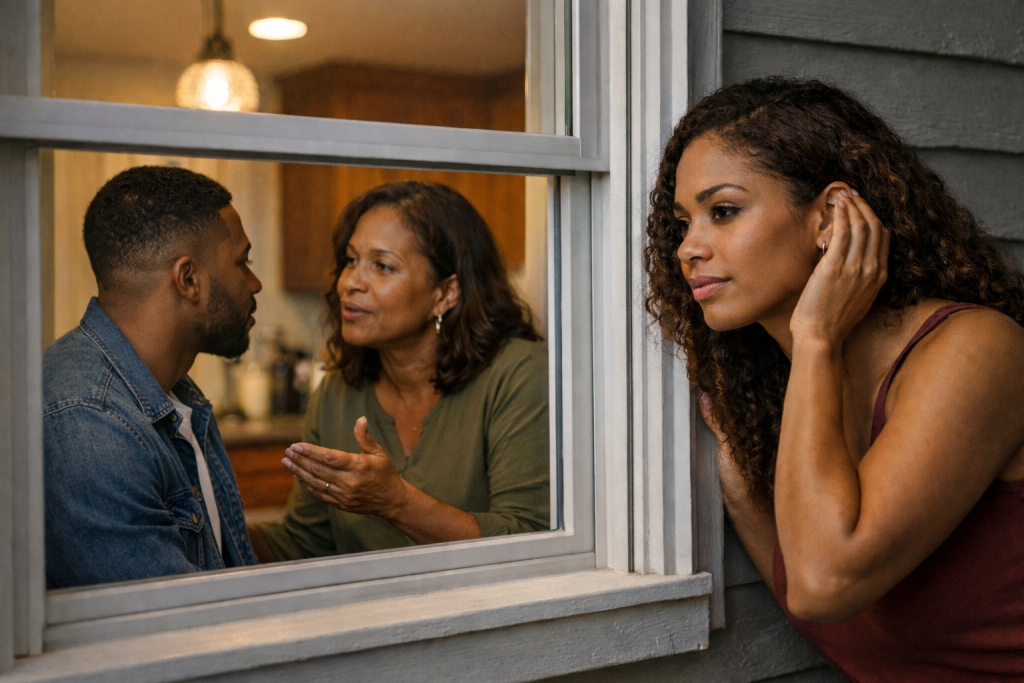
Over time, siblings can start relating to each other through the triangle: as allies, as competitors, as witnesses, as scapegoats. The mother may not even intend harm, but if she is the emotional hub, triangulation can form around her simply because that’s where the emotional weather is being tracked.
Caregiving: The Stage Where Old Roles Become Loud Again
Even siblings who were “fine” in their 20s and 30s can fracture when parents begin to need help. Caregiving decisions activate:
- Old fairness arguments (“You always got away with everything.”)
- Old identity roles (“I’m the fixer.” “I’m the outsider.”)
- Old injuries (“Mom never saw what I carried.”)
This is not hypothetical. Research on sibling dynamics in parent care notes how unresolved rivalry and questions of “equal obligation” can resurface when parents need support.
And the context matters: family caregiving is widespread and rising in the U.S., with tens of millions of caregivers, and women still representing a majority.
When caregiving lands unevenly, sibling relationships often become the battleground for deeper questions: Who is loyal? Who is selfish? Who is “good”?
In many families, the mother is the person receiving care or directing it, so her preferences can amplify sibling tensions, intentionally or not. If she leans on one child more, praises one child more, or complains to one child more, it can re-ignite the family’s original “role assignments.”
The Part We Avoid Saying Out Loud: “Mom” Can Also Be a Symbol
Sometimes the mother is not the problem as a person. She is the symbolic site where siblings are still trying to resolve:
- Who was lovable.
- Who was chosen.
- Who had to earn belonging.
- Who got protected.
- Who got blamed.
That is why adult sibling conflict can feel strangely young, even when everyone is in their 40s, 50s, or 60s. The argument is about today’s logistics, but the emotion is about yesterday’s meaning.
This is also why a mother’s smallest behaviors can feel enormous. A casual comment like “Your brother always checks on me” can land as a lifetime verdict.
But Is It “More Often Than Not” the Mother?
Here is the honest answer: the mother is often involved, but not always culpable, and rarely the only factor.
Adult sibling friction can come from:
- Personality differences and incompatible values.
- Unequal money outcomes, inheritance fears, or financial entanglements.
- Spouses and partners reshaping loyalties.
- Trauma histories that siblings experienced differently.
- Distance, resentment about effort, or uneven emotional labor.
Also, focusing only on “the mother” can accidentally erase:
- The father’s role (including absence, favoritism, or conflict avoidance).
- Cultural expectations that burden mothers with kin work.
- The reality that many mothers were parenting inside their own stress, depression, economic pressure, or untreated trauma.
So the most useful framing is not “Mom caused this.” It is:
The sibling relationship is living inside a family system, and the mother is often the system’s most powerful relay point.
That framing keeps empathy intact while staying specific about patterns that can be changed.
No two children grow up with the exact same mother, even in the same house, because she shows up differently to different needs, temperaments, and seasons of her own life. What feels like love and protection to one sibling can feel like pressure, comparison, or invisibility to another, and both experiences can be true at the same time.

When Mom Is Actively Fueling the Fire
But sometimes the tension is not just an old echo of childhood roles. Sometimes a mother is still actively stoking sibling conflict through comparisons, private venting, selective storytelling, or turning one child into the “translator” of the other. In those cases, the task for adult children is not to diagnose her motives or win an argument about the past. The task is to stop being usable in the conflict.
The most effective move is to step out of the triangle. That can sound like: “I’m not going to discuss my sister/brother when they’re not here,” or “If you want this resolved, it needs to be a conversation with all of us.” It can also mean refusing to carry messages, refusing to compete for the “good child” position, and moving sensitive family decisions into shared group communication so facts stay consistent.
This approach can feel harsh at first, especially for the child who has been rewarded for loyalty and emotional labor. But it is often the only way to protect the sibling relationship from becoming a proxy war.
A Practical Lens: Four Patterns That Commonly Fuel Adult Sibling Friction
These patterns show up in families that otherwise look “fine” from the outside. The fix is rarely a perfect conversation. It’s usually a small structural shift.
Pattern 1: The “Fairness Ledger”
Invisible accountingEveryone carries a private spreadsheet of who got what: time, help, praise, forgiveness, financial support. Those perceptions matter because they shape sibling tension and well-being.
“I think we have different memories of how support worked in this family.”
Pattern 2: Role Locking
Old labels, new stressOne sibling stays “the responsible one,” another stays “the mess,” another stays “the peacemaker.” When caregiving arrives, these roles quietly turn into job assignments.
“Let’s decide tasks based on capacity and location, not childhood labels.”
Pattern 3: Triangles as Communication
Information detoursInformation flows through Mom, and conflict does too. Triangles are common, but they create indirect relationships that breed resentment and misunderstanding.
“If it affects all of us, we discuss it together.”
Pattern 4: The Unspoken Grief
Hidden sadnessSometimes siblings are fighting about logistics while grieving the same thing: the parent they wished they had, the family they thought they would become, or the reality of aging and vulnerability.
“This is scary.” “I’m sad.” “I feel alone in this.”
If You Want Peace, Stop Asking “Whose Fault” and Start Asking “What Pattern”
Blaming the mother can feel satisfying because it creates a single cause and a single target. But families are not single-cause systems. They are pattern systems.
If adult siblings are in friction, parents are often part of the origin story. Mothers are often more visible in that story because they are frequently the emotional hub, the kinkeeper, the one whose approval and attention carried outsized meaning, and the one whose needs now organize the family’s logistics.
Still, the most hopeful truth is this: patterns can be interrupted. A sibling relationship does not have to remain a reenactment of childhood.
The goal is not to put mom on trial. The goal is to stop living in the same script.
And the moment siblings start speaking to each other directly, negotiating roles consciously, and telling the truth about what caregiving and history are stirring up, something shifts. Not because the past disappears, but because the present finally belongs to the adults in the room.
