

 Staff Writer
Beauty often gets treated like a personal preference, but historically it has functioned more like a public language. It signals who is “in,” who is trusted, who is considered disciplined, who is employable, who is desirable, and who is worth noticing. That language changes when societies change: when economies shift, when new media arrives, when women’s roles expand, and when the definition of a “good life” stretches beyond childbearing years.
For women over 50, this is not an abstract cultural debate. Many came of age in a period where beauty was tightly chained to youth. Now they are living in an era that promises more visibility and more “options,” while also raising the bar for how much work it takes to remain visible. The result is a complicated moment: more permission to define beauty on your own terms, and more pressure to keep up with a constantly updated standard.
No beauty norm, from any culture or era, should be used as a gatekeeping tool for respect, because dignity is not something people should have to earn by conforming their face, hair, body, age, or presentation to whatever standard happens to be dominant.
Beauty as status, virtue, and “respectability”
In many pre-industrial societies, beauty ideals were closely tied to class, health signals, and social standing. What counted as “beautiful” often tracked what was scarce: clear skin when disease was common, softer hands when manual labor was the norm, or particular grooming practices that signaled wealth and time. Beauty was less about self-expression and more about social position, marriageability, and “respectability.”
This matters because it reveals a pattern that never fully disappeared: beauty standards frequently reward access. Time, safety, money, nutrition, rest, and healthcare have always shaped the baseline for what a society calls “attractive.” Even today, the most praised versions of “natural beauty” often require the most resources to maintain.
Beauty becomes a product you can buy (and a habit you’re expected to keep)
As industrialization expanded consumer goods, beauty shifted from something you “had” to something you could purchase and manage. Modern advertising helped turn grooming into routine, and routine into identity: the right skin, the right hair, the right fragrance, the right silhouette. Beauty became a market category, and women became a lifelong target demographic.
Today, that market logic is massive. Research and Markets projected the global anti-aging products market at about $52.32 billion in 2024, rising to $78.34 billion by 2030 (forecast). The size of these numbers is not just trivia. It shows how deeply “anti-aging” has been normalized as an expectation, not merely an option.
Beauty becomes a media template
Film, photography, and TV standardized beauty in a new way. Instead of comparing yourself to people in your community, you compared yourself to curated faces and bodies designed for mass appeal. When a society repeats the same templates long enough, they start to feel like “common sense,” even when they are historically new.
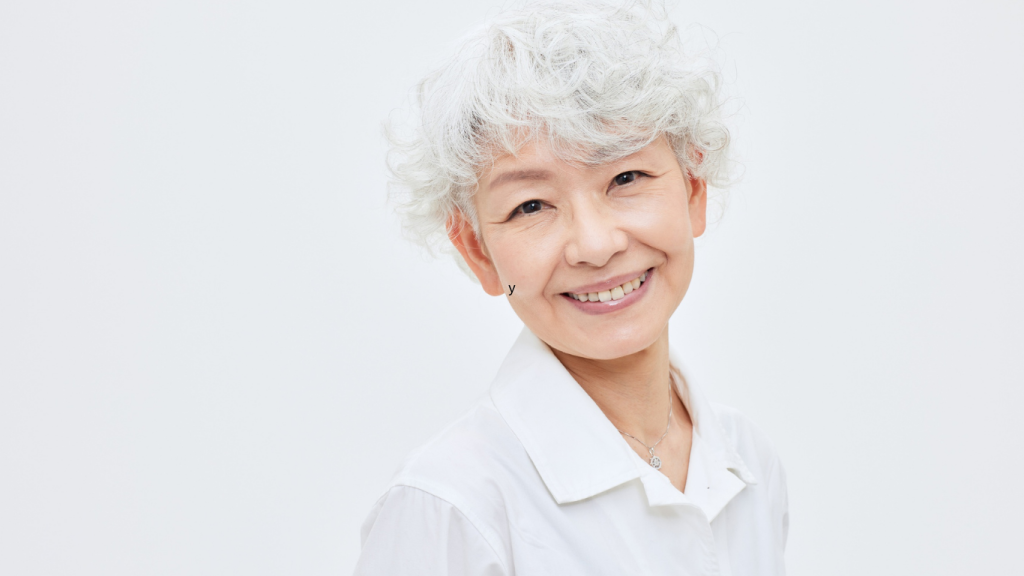
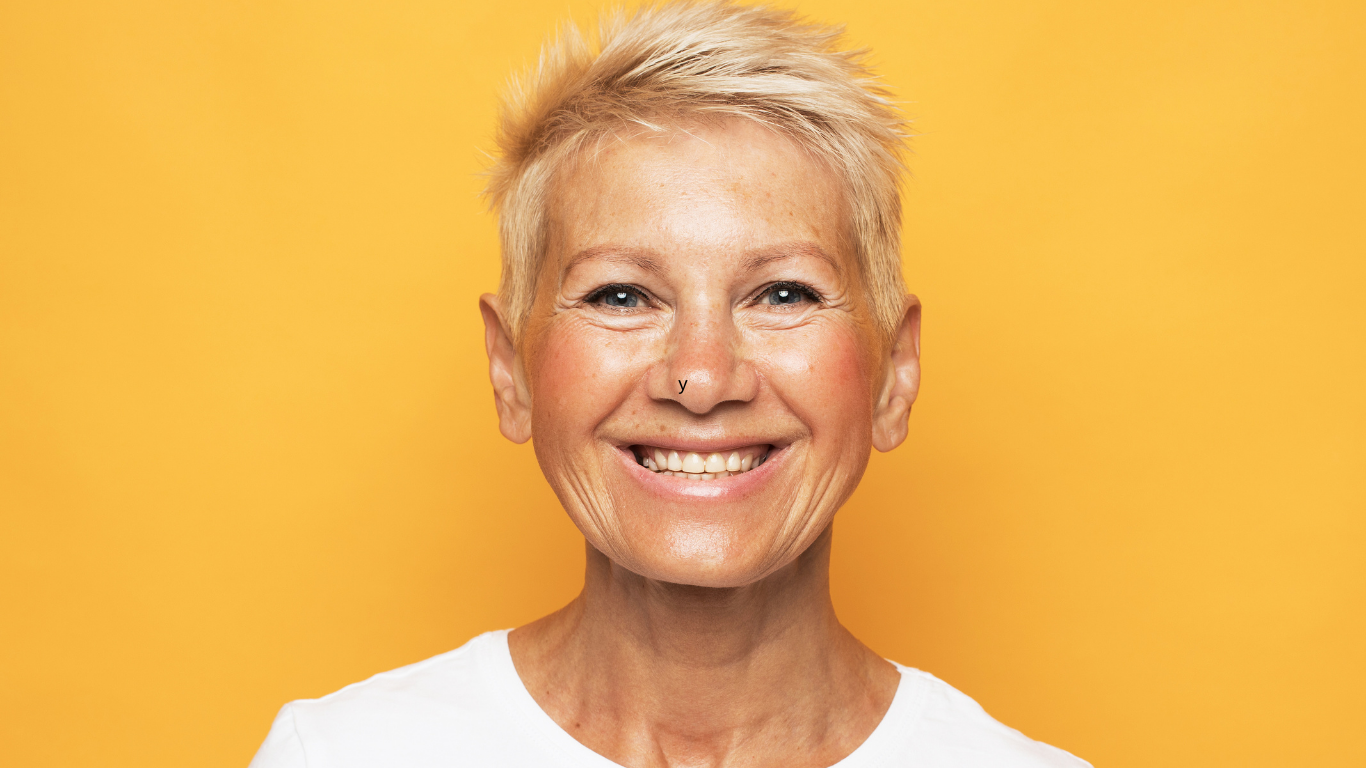
This media standardization also shaped aging: older women were often written as background characters, comic relief, cautionary tales, or “before-and-after” projects. The message was subtle but steady: youth is the main plot; aging is what happens off-screen.Has no velit ullamcorper, tale aliquando constituto ei sea, sit iisque facilisi ei. Ad quo possit disputationi. Eam invenire laboramus constituam ex, vel dolore antiopam ex, te pro tota sonet noluisse. Menandri molestiae eum an, pri ut ludus deterruisset delicatissimi. At noster iriure nec, et vix dico graecis.
Beauty becomes a performance (and the audience is always present)
Social media changed the mechanics of beauty again. Beauty became more continuous, more documented, and more measurable. Not just “Do you look good?” but “Do you look good in this lighting, from this angle, at this distance, on this camera, in this algorithm?”
This affects women over 50 because they are not outside these platforms. Pew’s 2025 report shows YouTube (84%) and Facebook (71%) are still the most widely used platforms among U.S. adults, and daily Facebook use is highest among ages 30–64, including 54% of adults ages 50–64 who say they use Facebook daily. When beauty becomes a digital performance, it does not only pressure the young. It pressures anyone who wants to be seen.
Aging is not an aesthetic emergency; if you change your appearance, let it be from joy and agency, not from the feeling that time is something you must apologize for.
Beauty becomes “optimization”
The newest evolution is the language shift from “beauty” to “maintenance,” “wellness,” “aging well,” “rejuvenation,” and “preventive” everything. Some of this is genuinely beneficial. Better skincare knowledge, sunscreen habits, strength training, sleep, and health-focused routines can improve quality of life. But the optimization era has a shadow side: it can quietly convert normal human aging into a problem you must fix.
Non-surgical cosmetic procedures illustrate this normalization. The American Society of Plastic Surgeons reported more than 9 million neuromodulator injections and about 5 million hyaluronic acid filler treatments in 2023, with minimally invasive procedures growing year over year. The takeaway is not that anyone is “wrong” to participate. It’s that the menu is expanding, and social expectations often expand right alongside it.
What this means for women over 50, in real life
Women over 50 are navigating a beauty landscape shaped by longer lifespans, bigger markets, and constant visibility.
1) You are living through a longevity revolution
Globally, populations are aging fast. The UN has noted there are hundreds of millions of people 65+ today, with projections reaching roughly 1.5 billion by 2050. WHO similarly emphasizes the rapid growth of older populations worldwide. The cultural implication is big: a longer life creates a longer “middle,” where women are not “past their prime,” but actively building, earning, caregiving, dating, learning, and leading.
In the U.S., the Census Bureau reported the population age 65+ reached 61.2 million in 2024 and accounted for 18.0% of the population. The more common older adulthood becomes, the harder it is for culture to justify treating older women as invisible.
2) Visibility is possible, but it can feel conditional
Many women describe a whiplash: becoming more confident internally while feeling more scrutinized externally. Some feel they can finally dress for themselves. Others feel newly judged at work, in healthcare settings, or in dating, where “looking tired” gets interpreted as “not trying.”
Workplace ageism plays a role here. AARP’s research reports that about 64% of workers age 50+ say they have seen or experienced age discrimination, and 22% say they feel pushed out because of age. If being perceived as “old” can carry economic consequences, beauty choices stop being purely aesthetic and start functioning as risk management.
3) The “maintenance tax” is real, and it lands unevenly
The optimization era can quietly create a new burden: time, money, and mental bandwidth devoted to staying “acceptable.” For some women, that burden is manageable or even enjoyable. For others, it competes with caregiving, chronic health issues, grief, divorce recovery, or simply the exhaustion of doing too much for too long.
4) “Beauty” is not culturally neutral
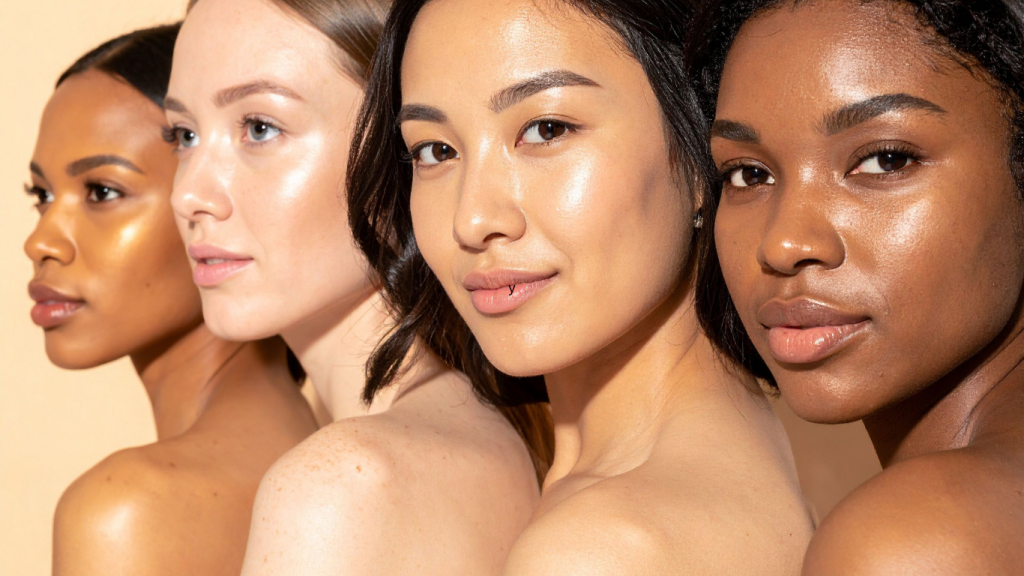
Beauty ideals have never been experienced the same way across race, ethnicity, hair texture, body type, disability, religion, or class. The past decade has brought real shifts in visibility, but it has also highlighted how often “professionalism” is coded to favor certain looks.
Hair is an especially clear example because it sits at the intersection of identity and policy. In November 2025, Pennsylvania’s governor signed the CROWN Act into law and described Pennsylvania as the 28th state to prohibit hair-based discrimination tied to race, including protective hairstyles. Whether or not a woman chooses gray hair, natural texture, locs, braids, or a head covering, the point is bigger than style. It’s the right to show up without being penalized for what your body naturally does or what your culture honors.
5) Social media changes comparison at every age
Because adults 50–64 are heavy daily users of major platforms like Facebook, and YouTube remains widely used across ages, many women are absorbing beauty ideals through constant exposure, even if they are not chasing trends. The comparison is not always conscious. It can show up as a vague sense of being “behind,” “tired-looking,” or “less polished than I should be.”
For women over 50, the risk is not simply insecurity. It is disorientation: trying to figure out whether your desire is genuinely yours, or a response to an atmosphere that punishes visible aging..
A grounded way to redefine beauty after 50
Beauty as three things
1) Beauty as comfort: Do I feel at home in my body today? What helps me feel like myself?
2) Beauty as signal: What do I want to communicate now: authority, softness, creativity, sensuality, seriousness, warmth, ease?
3) Beauty as autonomy: Does this choice give me more freedom, or does it make me feel managed?
The choice vs. compliance check
Ask three questions:
- If nobody saw this, would I still want it?
- Do I feel expanded afterward, or quietly tense?
- Does this fit my real life (time, money, health, energy) without resentment?
The bigger shift
Beauty has evolved from status signal, to consumer habit, to media template, to digital performance, to optimization culture. Women over 50 are not “late” to this conversation. They are central to it, because they are living proof that a meaningful life does not narrow with age. It widens.
The most useful definition of beauty in this stage may be the simplest: the face and body that accurately belong to you, shaped by experience, cared for with intention, and shown to the world without apology or punishment.
