

 Staff Writer
It’s not exactly a mystery why so many women over 50 feel culturally “edited out” of modern romance narratives. In mainstream film and TV, midlife women are still far more likely to be framed as someone’s mother, boss, or cautionary tale than as the central subject of longing, reinvention, or sensual joy. And when intimacy does show up, it’s often treated like a punchline, a crisis, or a last-chance plot twist, not a normal (and evolving) part of adult life.
The numbers back up that lived experience. In a decade’s worth of blockbuster films and top-rated TV shows, characters 50+ make up less than a quarter of roles, and among those characters, men significantly outnumber women (including in streaming). In popular films, the pipeline narrows further: a major USC Annenberg Inclusion Initiative report found women were under a quarter of speaking characters aged 40+ in the top 100 movies of 2023.
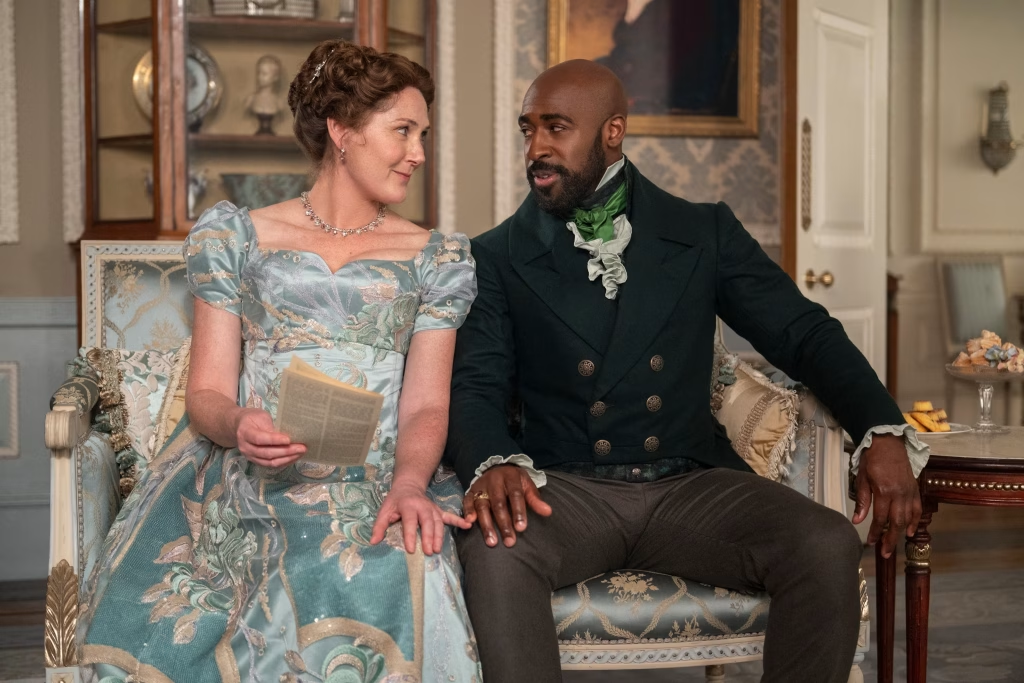
So when a glossy, widely watched romance series makes space for a mature woman to want, choose, and enjoy intimacy without apology, it lands differently. That’s why Season 4 of Bridgerton feels like more than just another chapter of gowns and gossip. Not because the season’s primary love story is older (it isn’t), but because it quietly insists that the older woman in the room isn’t there only to guide younger lovers. She’s there to live, too.
To be fair, it’s not only prejudice. It’s also risk-aversion. Studios and streamers often fall back on what they believe is “market-tested,” and romance has historically been sold using a narrow visual language: youth, novelty, and a fantasy of endless firsts. That approach can make later-in-life intimacy feel like it doesn’t “fit the template,” especially when executives assume (incorrectly) that younger audiences won’t relate.
But representation research suggests the real issue is less about audience discomfort and more about storytelling habits that have calcified into defaults. The Geena Davis Institute on Gender in Media has found that women 50+ are consistently underrepresented and that older female characters are greatly outnumbered by older male characters across film and TV categories.
In other words, the industry can’t learn what it refuses to practice. If you rarely write mature women as romantic leads, you rarely learn how to do it well.
What Bridgerton Season 4 does that’s quietly disruptive
Season 4 is formally built around the romance between Benedict Bridgerton and Sophie Baek, released in two parts on Netflix (Part 1 on January 29, 2026; Part 2 on February 26, 2026). The series gives its family matriarch, Violet Bridgerton, a storyline that treats her desire as alive, not simply nostalgia.
The “tea” scene and why it matters
In Episode 4, Violet orchestrates an evening alone with Lord Marcus Anderson. What’s striking is not simply that the scene is sexual. It’s the tone: the moment isn’t framed as ridiculous, desperate, or scandalous in a moralizing way. It’s framed as selfhood.
A Jess Brownell interview on Tudum describes the scene in which Violet finally chooses herself after years of centering everyone else, emphasizing her clarity about what she wants. Another recap underscores that Violet initiates the encounter and later names the feeling that follows: happiness.
That combination, agency plus tenderness plus uncomplicated pleasure, is still oddly rare for older women in mainstream romance.

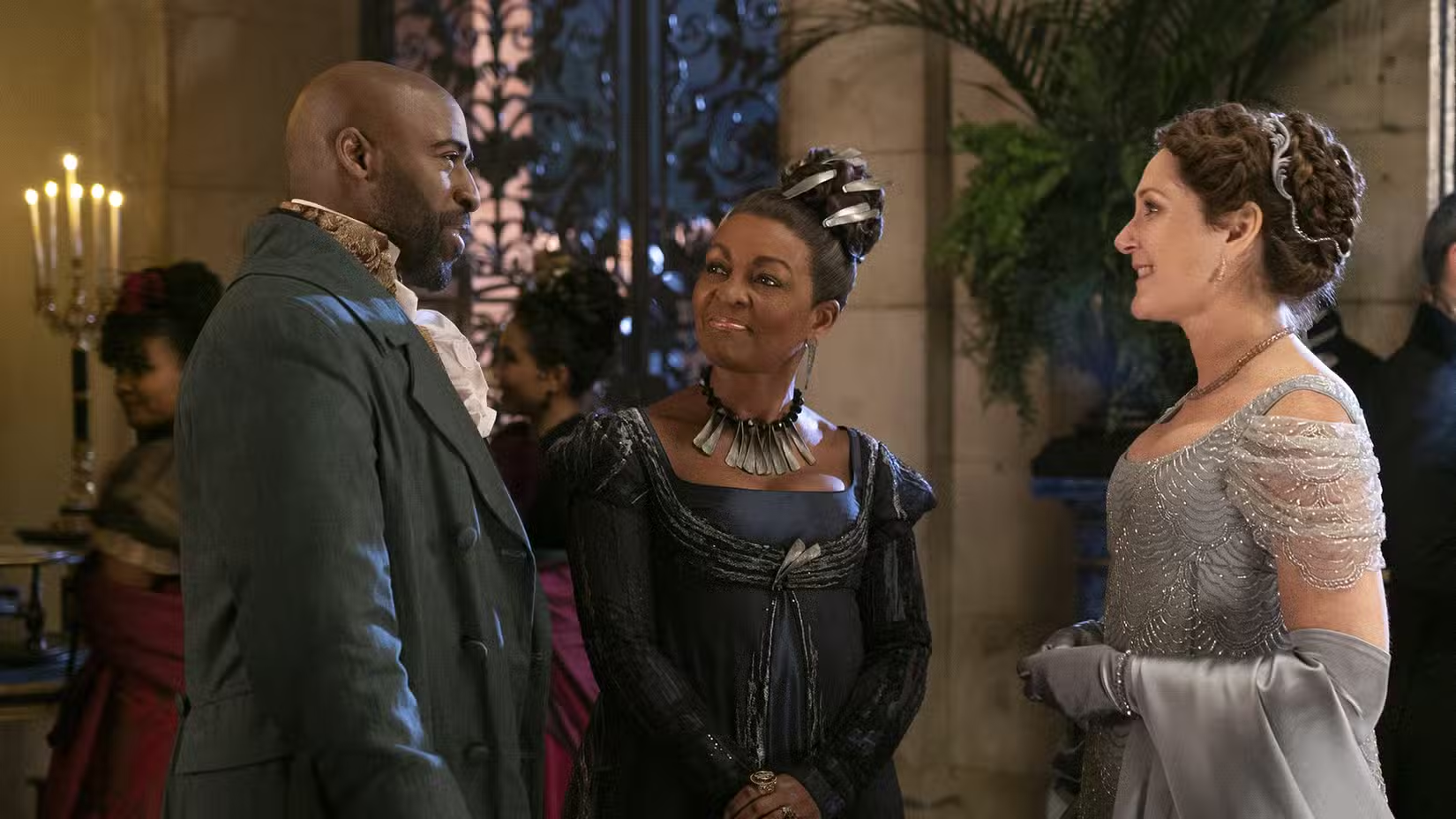
It’s not “hot for shock.” It’s intimate as character development.
A lot of shows use late-in-life intimacy as a twist. Bridgerton uses it as a continuation.
Violet isn’t rewritten into someone else to “earn” sensuality. She’s still herself: composed, thoughtful, strategic, and deeply invested in her family. The difference is that Season 4 refuses to treat those traits as the end of her story. It says: you can be the emotional anchor and still want to be touched, desired, and chosen.
That’s a more radical message than it sounds, because it pushes against two stereotypes at once:
- The “asexual older woman” trope (invisible, finished, purely maternal).
- The “predatory older woman” trope (desire as something embarrassing or comedic).
Instead, she’s simply human.
The bigger cultural context: why this is happening now
Bridgerton didn’t invent the hunger for better stories. It’s responding to pressure that’s been building for years, from viewers and from the industry’s own data.
- Representation is still lagging. In film, women’s presence (and especially older women’s presence) remains stubbornly low in many categories.
- Audience demographics are shifting. The financial and cultural influence of older viewers is expanding, not shrinking.
- Streaming is global and multi-generational. Hits aren’t built only on 18–34 attention anymore. They’re built on rewatching, word-of-mouth, and broad appeal.
Bridgerton also has a structural advantage: it’s a romance universe that already takes desire seriously, and it’s produced under the Shondaland banner led by Shonda Rhimes, a creative ecosystem that has historically centered women’s inner lives as plot, not side commentary.
I am enough of an artist to draw freely upon my imagination. Imagination is more important than knowledge. Knowledge is limited. Imagination encircles the world

What this could change if other shows pay attention
If Bridgerton Season 4 becomes a reference point for “how to do it,” here are the ripple effects that actually matter:
1) Mature women can be written as romantic subjects without explanation. No tragic backstory required. No makeover montage required. No “isn’t this hilarious?” framing required.
2) Intimacy can be portrayed as evolving, not expiring. You can acknowledge changes in confidence, bodies, timing, or life circumstances without treating desire as a problem.
3) Romance after 50 can be aspirational without being unrealistic. The goal isn’t to pretend aging is irrelevant. The goal is to stop using aging as a reason to withhold tenderness.
4) Younger viewers benefit, too. Because the message isn’t “someday you’ll lose your value.” It’s the opposite: your story continues, and your capacity for love isn’t a youth-only resource.
It’s also worth naming what Bridgerton can’t do, because it’s a fantasy world by design. This is still a stylized universe where wealth cushions consequences, beauty is curated, and emotional arcs resolve more neatly than real life. So the win here isn’t “finally, realism.” The win is “finally, permission.”
Permission for an older woman character to be wanted.
Permission for her to initiate.
Permission for her pleasure to be filmed with softness rather than satire.
That’s a cultural shift even when it happens inside a fantasy.
Hollywood hasn’t been “confused” about women over 50. It’s been selective about what it’s willing to imagine for them. Season 4 doesn’t fix the industry. But it does something powerful: it places a mature woman’s desire inside a mainstream romance machine and treats it as normal, warm, and earned simply by being alive.
And once audiences get a story like that, it becomes harder to accept the old rule that women over 50 should fade into the wallpaper of everyone else’s love life.
Discover more from Empty Nest Joy
Subscribe to get the latest posts sent to your email.
